The Modular Advantage
When evaluating the shift toward prefabricated building manufacturing, the primary driver is risk mitigation. Traditional site-built projects are heavily exposed to environmental variables, labor shortages, and logistical bottlenecks. Modular construction systematically addresses these vulnerabilities by treating a building as an industrial product.
Controlled Factory Environments
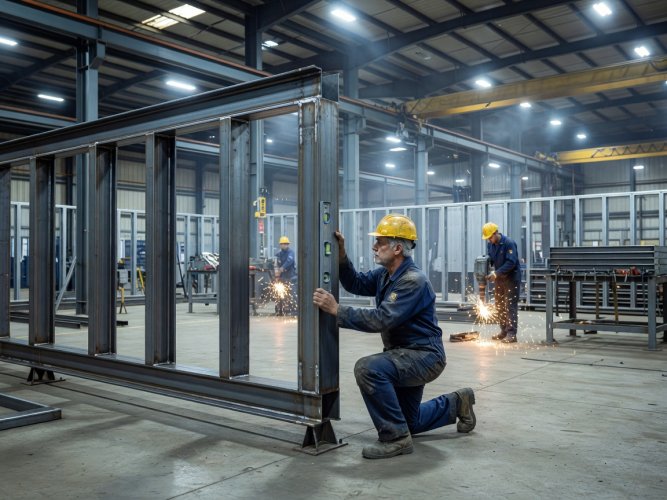
In a factory setting, construction happens in a climate-controlled environment. This eliminates days lost to rain, snow, or extreme heat. Furthermore, building materials are protected from moisture degradation, ensuring that timber does not warp and steel does not pre-maturely rust before integration. Workers operate in ergonomically optimized stations with access to heavy lifting machinery, increasing safety and productivity.
Concurrent Scheduling
The most significant economic benefit of prefab is concurrent scheduling. In traditional construction, a linear timeline is mandatory: land clearing, foundation pouring, framing, systems installation. With modular building, site preparation and foundation work occur simultaneously with the factory fabrication of the building modules. By the time the concrete foundation cures, the building is ready for delivery.
"By overlapping site prep with factory manufacturing, project timelines are routinely compressed by 30 to 50 percent, vastly reducing financing holding costs."
Quality Assurance and Standardization
Industrial manufacturing relies on strict tolerances. Walls are squared using laser-guided jigs, and mechanical, electrical, and plumbing (MEP) systems are installed and tested before leaving the facility. This standardization dramatically reduces punch-list items upon project completion. Inspections occur sequentially on the assembly line, ensuring code compliance at every step of fabrication.